
2
Jul 2026Build to Rent and coliving: two different models or the same category? | OCN
For years, the Spanish real estate sector talked about Build to Rent as if it were the big new thing. Soon after, coliving burst onto the scene and settled into the vocabulary of developers, investors, and specialized media with equal intensity. Today, however, more and more voices within the sector are asking whether we’re really looking at two distinct realities or whether, in practice, both models have ended up converging into a single category: rental residential designed to be lived in, managed, and monetized as an asset.
The question is not a minor one. It has direct implications for how each building is designed, built, and operated. And it’s a question that, at OCN, we’ve been observing firsthand for some time.

Qué es el Build to Rent y qué lo define
Build to Rent — commonly abbreviated as BTR — refers to residential buildings conceived from the outset for the rental market. These are not standard for-sale developments repurposed for rent, nor assets acquired second-hand: they are properties designed and built with the intention of remaining in the hands of an institutional operator or fund that manages them professionally.
This origin changes everything from a construction standpoint. BTR calls for unit typologies optimized for tenant turnover, durable low-maintenance finishes, common areas designed as differentiating value elements, and floor-area efficiency that maximizes profitability without compromising livability. Housing stops being a product to sell and becomes a service that has to stay competitive over time.
In Spain, the model has gained traction especially in major cities, although in recent years we’ve seen mid-sized cities and tourist markets — such as the Valencian Community or the Balearic Islands — increasingly attracting this type of operation.

What coliving is and how it differs — or doesn't
Coliving emerged as a response to a very specific demand: that of young profiles, digital nomads, and mobile professionals who needed something more than a conventional rental apartment. They were looking for a space that combined privacy in the individual unit with shared services — kitchens, work areas, leisure zones — that fostered community and reduced the friction of settling into a new city.
In its purest form, coliving involves intensive management of both the space and the tenant, with more flexible contracts, services included in the rent — utilities, cleaning, activities — and a value proposition that goes beyond square meters. The building isn’t just a container for homes: it is, to some extent, a hospitality product.
This is where the similarities with BTR begin. Because if we look at the projects being developed today under either umbrella, the line between the two blurs quickly.

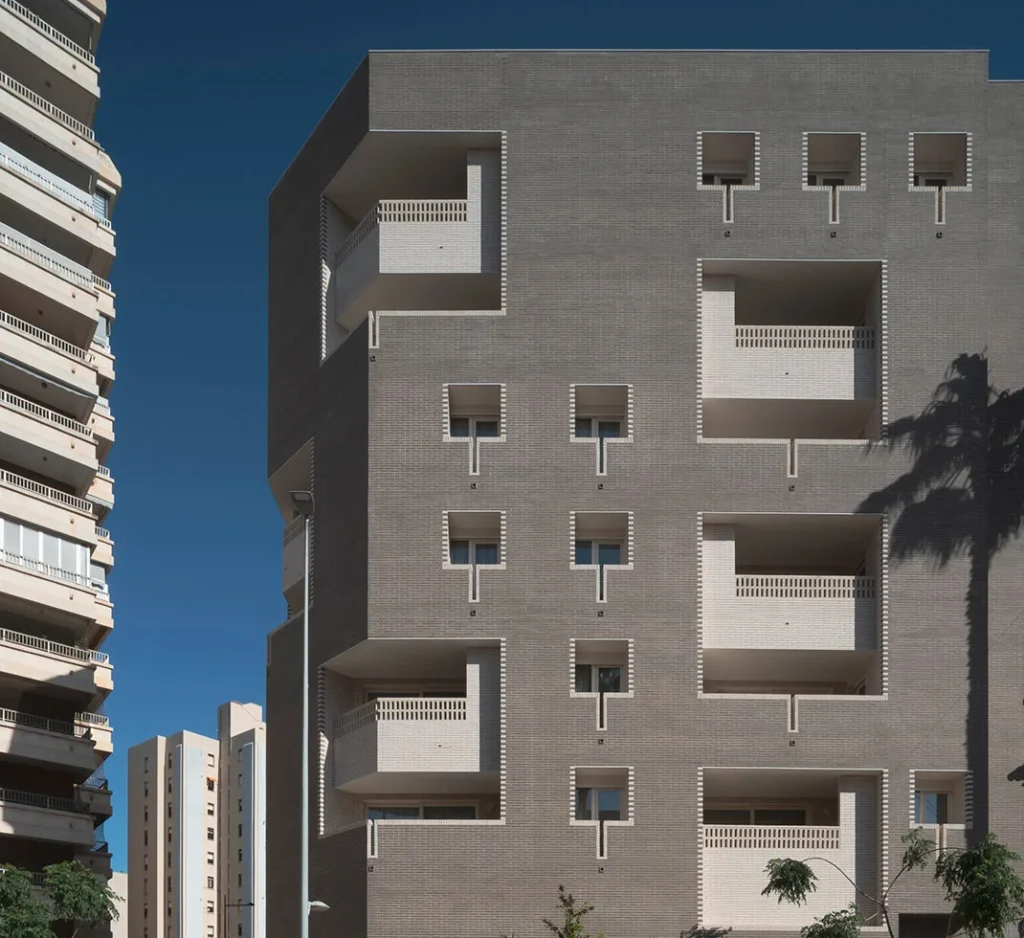
A growing construction company, with headquarters to match
The market has started grouping BTR, coliving, senior living, student housing, and long-term tourist apartments under the umbrella term living. It’s not an arbitrary label: it reflects a common logic that runs through all of them.
First, the business model is the same: buildings are constructed to hold the asset, manage occupancy, and generate recurring income. There’s no buying and selling — there’s operation.
Second, user experience has become the core of the project. Both quality BTR and contemporary coliving compete for the same tenant — increasingly demanding, better informed, and with more choice — and both do so through well-curated common areas, integrated services, and management that resembles hotel hospitality more than traditional leasing.
Third, the construction requirements are practically identical. It calls for industrialization, precision in scheduling, materials that can withstand intensive-use cycles, and coordination between architecture, interior design, and the operator from the earliest phases of the project. A construction company that doesn’t understand the asset’s operational logic will struggle to deliver it in a condition to compete.

The differences that do matter
That said, there are nuances worth noting.
BTR generally operates with more self-contained units, larger floor area per home, and demand aimed at a very diverse range of profiles: families, couples, working professionals looking for rental stability without wanting — or being able — to buy a home. Coliving, by contrast, maximizes the density of space use, offers more compact units, and targets a tenant profile that values flexibility and community living over private square meters. It’s not just a matter of age: it’s a matter of life stage, mobility, and priorities. An executive temporarily relocated to a city, an entrepreneur working remotely, or a professional between projects may find coliving a better fit for their situation than conventional rental.
This difference in end user shapes the space requirements: BTR needs more private floor area and less shared space; coliving inverts that equation. And that has direct consequences for the construction project, the distribution of loads, and the type of installations each building requires.
They also differ in applicable regulation. In Spain, coliving still operates within a loosely defined regulatory framework, where planning classification, minimum unit size, and tenancy arrangements vary considerably by autonomous community. BTR, being conventional rental housing, operates with greater legal clarity, though it isn’t immune to the uncertainties that recent tenancy legislation has introduced into the market either.

Lo que el mercado está resolviendo
The dominant trend is clear: BTR is increasingly absorbing elements of coliving — services, community, hospitality — while coliving tends to professionalize and scale toward formats closer to BTR. The lines are crossing. The most advanced operators no longer distinguish between the two: they talk about living, about residential-as-a-service, about portfolios of assets with different risk and return profiles but the same construction and operational logic.
For us, this convergence has a very concrete implication. At OCN we’ve spent years building in this category — with BTR projects in Castellón totaling more than 300 homes delivered — and we’re currently developing coliving projects in Valencia that now place us at both ends of what the market today understands as living. What we’ve learned along the way is that the building that works is the one where the construction company comes on board while program decisions are still being made — not once the project is already closed.